Introduction. By 784 the patriarch of Constantinople, Paul VI, had repented of the iconoclastic heresy that had spread deeply throughout the East thanks to imperial support. Paul's successor Tarasius requested an ecumenical Council that would warrant the veneration of icons, but also reunite the East with Rome, who had always retained the use of icons. The Council was organized by the Empress Irene and was convened in the city of Nicaea, the site of the first council. Pope Adrian sent two papal delegates.
In eight sessions, around 260 bishops embraced the use of icons for devotional veneration and issued 22 disciplinary decrees aimed at encouraging priestly knowledge of the Scriptures, lessening secular influence on the selection of bishops and reforming the minor orders.
Ironically, although the Byzantine imperium had finally come around to supporting icons, the Council was not well received in the imperial court of the Franks. Charlemagne, thanks to an alliance with the Pope, had consolidated significant territorial power in the West. A rivalry had developed between his own court and the Eastern emperors on the true inheritance of the Roman Empire, which played out in theological suspicion.
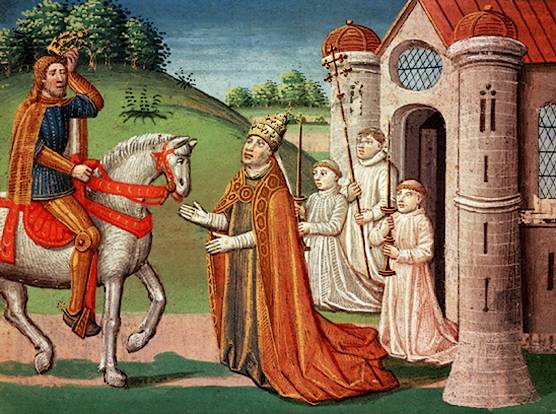
Pope Adrian, for his part, had developed a close friendship with Charlemagne. When the papal territory was threatened by the Lombards, the Pope requested and received the military defense of the Franks. In thanks, Charlemagne was named patrician of the Roman people and king over the Lombards. Adrian would later name Pippin, Charlemagne's son, king of Italy and establish the territorial boundaries that would later become the Holy Roman Empire.
It was primarily out of suspicion of all decisions of the court of Constantinople that Charlemagne's court theologians drew up a list of doubts concerning the Council. It must have put Pope Adrian in a difficult situation, having warranted the Council and approving the reunion of East and West, but also interested in preserving his friendship with Charlemagne who had guaranteed his security against invading armies.
The "proto-dubia" of Charlemagne was delivered to Pope Adrian by Engilbert, one of Charlemagne's theologians, in AD 794. The majority of the accusations focused on the Council's decision with regard to venerating images, but it also gives us a preliminary peak at a theological debate on the origin of the Holy Spirit that would, within a few hundred years, once again divide the East and West. The letter that Pope Adrian wrote in defense of the Council, therefore, gives us an interesting first millennium, united-Church perspective for a debate that remains between East and West to this day.
Reporting from the acts of the Council that Tarasius had confessed the Holy Spirit proceeds from the Father "through the Son," Charlemagne charges him with the mistake of not confessing the filioque, that is that the Spirit proceeds from the Father and Son. Interestingly, the modified version of the Nicene-Constantinople Creed including the filioque must have by this time been so well established for the Franks that it was thought to have been included in the original version of the creed drawn up at the First Council of Nicaea.
It is surprising then that Pope Adrian didn't simply correct this error of fact in responding to this charge. After all, the filioque was not then in liturgical use in Rome. Already, then, we see Adrian, like later his later papal successors, distinguishing between the theology of the filioque, which was accepted as true, and the prudential decision of adopting it liturgically or exclusively.
In defending Tarasius's formulation that the Spirit proceed "through the Son," then, it is clear Pope Adrian confesses what the contemporary Catechism of the Catholic Church teaches - namely, that the origination of the Spirit "per filium" and "filioque" are complementary, not contradictory, formulations of the same faith. (cf. CCC #248)
Interestingly, Pope Adrian's response focuses on assembling the patristic evidence from the incident in John 20 where Jesus breathes onto the Apostles and says "Receive the Holy Ghost." For this, he traces a line from Saint Athanasius through Saint Augustine to Saint Gregory which sees the breathing as definitive proof of not just of the economic sending of the Spirit for the purpose of our salvation, but also the eternal relations of the Second and Third Persons. In this Pope Adrian seems to be faithfully following the principle set forth by the Cappadocian Fathers that economy can reveal the eternal unity of substance and subsisting relations.
Our Lord and Redeemer, who by his provident counsel is the Creator, deigned to descend from the bosom of His Father in heaven ... The Gospel is clear to those who are knowledgeable that by the voice of the Lord the keys of the kingdom of Heaven and the care of the whole Church was entrusted to Saint Peter, the prince of all the Apostles. Indeed it is said unto him: "Peter, dost thou love me? Feed my sheep" (John 21). To him is it said: "Behold Satan has sought to sift you like wheat; and I have prayed for you, Peter, that your faith should not fail; and you, hereto converted, confirm thy brethren." (Luke 22) To him it is said: "Thou art Peter, and upon this rock I shall build my church, and the gates of hell shall not prevail against her; and I shall give to thee the keys of the kingdom of heaven, and whatever you have bound upon earth shall be bound in heaven as well, and whatever you loose upon earth, shall be loosed in heaven as well." (Matthew 16) Behold the office of prince and care of the whole church is entrusted to him. And it is recognized his role of care of the Church is handed on to his vicars, the pontiffs. For he too received the keys of the kingdom of heaven, and the power of binding and loosing is given to him. Wherefore, we are confidently supported that if your royal excellence, foreordained by God toward the holy, Catholic and apostolic Roman Church and us from the beginning, will remain all the way to the end in love and charity, not only will she save him from all sin, wiping away the stains, but also in this world she will grant immense victories over all the barbarian nations, joining them to his own as subjects, and on top of that, the kingdom of heaven without end. Besides directed by your most clement exalted royal power we have taken your faithful family friend, that is Engilbert the abbot and minister of the chapel, who was raised almost from the very beginning of his infancy in your palace, and has been accepted among all your counsels, so that as a result just as he is accepted among you in all familiarity, so also he is received by us and worthily honored. Wherefore in accord with the exceeding love which we bear toward your melliflous royal excellence, just as you sent with exceeding love of exceptional sweetness, receiving him, just as he wished and in such a way as he wished, with great familiarity relating to us, with a peaceful ear and a kindly mind we received him, and as if your excellence were relating to us in person, we rather patiently entrusted to him our counsel, for the benefit of our holy Roman Church and the exaltation of your divinely-protected royal power. And among those things he made known to us was the chapter against the synod that has been carried out in Nicaea on behalf of the setting up of sacred images. Wherefore for your mellifluous royal charity we have rendered a response to each chapter: not defending any man, far be it, but holding the ancient tradition of the holy catholic and apostolic Roman church, we follow the old teaching of our predecessors the holy pontiffs, vindicating the tradition of right faith in every way.
In the very first chapter taken up, in which he says: "And in the Holy Ghost, the Lord and giver of life, who proceeds from the Father through the Son."
Accusation. That Tarasius does not think rightly, since he professes the Holy Ghost as proceeding, not from the Father and the Son in accordance with the faith of the Nicene creed, but from the Father through the Son in the reading of his own credulity.
Reply. Tarasius did not expound this dogma himself, but he confessed it by means of the doctrine of the Holy Fathers. And their chapters, in accord with your exceeding love, which we bear toward your most upright, divinely-protected, royal excellence, we briefly lay out. For example, the work of Saint Athanasius concerning the appearance of the Lord in the flesh (In the sermon concerning the human nature assumed by the only-begotten Word), among others: "And for this reason he blows on the face of the apostles, saying: Receive the Holy Ghost (John 20), that we may recognize that the Holy Ghost was given to the disciples from the fullness of divinity. For in Christ, he says, dwells, that is in his flesh, all the fullness of divinity, bodily (Colossians 2), just as the Evangelist John also says: We have all received of his fullness (John 1). For in a bodily appearance just like a dove the Holy Ghost appeared (Luke 3), descending and remaining upon him. Truly, in us the first fruits and promise of divinity dwells, but in Christ all the fullness of divinity. And let no one confess that he himself received it as if not having it - for he was sending it to himself from above, as God, and he was receiving it for himself from below, as man. From him therefore it was descending into himself, from his divinity into his humanity." And after a number of things: "It is manifest that the Father made all things through him, through him therefore he raises up, through him he sanctifies, and through him he exalts, and through him he gives life."
Likewise the work of the same Saint Athanasius concerning Virginity, among the rest: "And in the Holy Ghost, who having being in the Father and the Son, goes forth from the Father and is given through the Son."
Likewise the Ecclesiastical History Book 7 of Eusebius of Caesaria, after a number of things: "The faith of Gregory the martyr and bishop of New Caesaria: One God the Father of the living Word, of subsisting Wisdom, and his own power, and figure, perfect begetter of the perfect one, Father of the only-begotten Son. One Lord, the only one from the only God, the figure and image of his divinity, the completing Word, wisdom comprehending all things, and the power by which the whole of creation was able to be made. The true Son of the true one, and the invisible Son of the the invisible one, and the incorruptible Son of the incorruptible one, and the eternal Son of the eternal one. One Holy Ghost, having his substance from God, and who appeared through the Son, the image of the perfect Son, the perfect cause of the living, sanctity that sets sanctification before us, through whom God above all things and in all things is known" and the rest And not only this history writer recalls the faith of Saint Gregory, but also the very great preacher Saint Gregory of Nyssa in his Greek sermon wonderfully and splendidly explained those things, in what way, and by what whom it was arranged and shown and appeared to the same Saint Gregory.
Likewise in book 8 of Saint Hilary's On the Faith (Book 8 On the Trinity), among other things: "Since the Holy Spirit, who is both the Spirit of Christ and the Spirit of God, is demonstrated to be a thing of a single nature, I ask therefore, how it is not one according to nature? The Spirit of truth proceeds from the Father, is sent by the Son, and receives from the Son, but everything the Father has, the Son also has. And therefore the one who receives from him is the Spirit of God, but the same one is the Spirit of Christ." And after a few things: "For the Spirit of God is in us, but the Spirit of Christ is also in us, and whenever the Spirit of Christ is within, the Spirit of God is within. Therefore what belongs to God belongs to Christ, and what belongs to Christ belongs to God, Christ is not able to be something different than God. Therefore Christ is God, Christ is one thing with God, hence that quote from the Gospel: the Father and I are one thing, etc." (John 10)
Likewise in the letter of Saint Basil to Amphilochius, bishop of Iconium (Book 1 On the Holy Spirit to Amphilochius, 18), among the rest: "And the Holy Spirit is one and the same, and he is said to be in union through the one Son joined to the one Father, and by himself filling up the exceedingly praiseworthy and blessed Trinity." And after a few things: "For there is one knowledge of God, from the one Spirit through the one Son in the one Father." And again: "Natural goodness both according to intrinsic holiness and royal dignity, passes from the Father through the Only-begotten to the Spirit, etc."
Likewise in Book 1 (chapter 3) of Saint Ambrose's On the Holy Spirit, among the rest: "You however will be baptized in the Holy Spirit." And after a few things: "Therefore there is unity of operation, unity of preaching, which cannot be separated. But if in this place the Spirit be separated from the operation of the Father and the Son, since it has been said 'all things are from God' and 'all things are through the Son,' then, since the Apostle said 'who is over all things God, blessed forever' (Romans 9) about Christ, he sets Him above not only all creatures, but also the Father, which is a sin to say. God forbid! For the Father is not among all things, not among some common run of his creatures. Every creature is below, the divinity of the Father, Son, and Holy Spirit is above. The former serves, the latter reigns; the former is subject, the latter rules, etc."
Likewise in Saint Gregory the Theologian's On the Second Epiphanies (Oration on the Holy Lights), among the rest: "For us however there is one God the Father, from whom all things are, and one Lord Jesus Christ, by whom all things are, and one Holy Ghost, in whom all things are. By this very thing however which we say, From whom, and By whom, and In whom, we do not divide the nature, for neither will altered syllables of prepositions change the truth of the nature, but it specifies the persons of the one nature which is unconfused. And that is most clearly indicated from the fact that that very diversity is again recalled into one; if however someone should read without haste in the same Apostle that which is written, when he said: 'Of him, through him, and in him are all things' (Romans 11) and he added: 'To him be glory forever' (ibid)."
Likewise in Saint Augustine's Sermon on the Ascension of the Lord among many things: "Conspicuously he gave on earth, close himself to those who were close to him, the Holy Spirit, blowing into their faces: and especially from that greatest charity which is in heaven, he sent from heaven the Holy Spirit. Receive the Holy Spirit on earth, and love your brother; receive it from heaven, and love God, since even on earth what you have received is from heaven. Christ gave on earth, but the one who gave is in heaven. For he gave who descended from heaven, etc."
In the same Saint Augustine's work On Pentecost, among the rest: "Let the fools cease to flatter and say to us: 'What are we going to receive, since we have come to you, since you admit that we already have Christ's baptism?' Let us respond to them: 'You have Christ's baptism, come, so that you may have Christ's Spirit also.' Fear what is written: 'Whosoever does not have Christ's Spirit, does not belong to him. You have put on Christ by the form of the sacrament, put him on by the imitation of his example.'"
And in Book 4 (chapter 10) of the same Saint Augustine's On the Trinity, among other things: "Nor can we say that the Holy Spirit does not proceed from the Son as well: for neither is it in vain that the same Spirit is called the Spirit both of the Father and of the Son. Nor do I see what else he wished to signify, in that blowing on them he said: Receive the Holy Ghost (John 20). For neither was that corporeal blowing, though proceeding corporeally from the body by the sense of touch, the substance of the Holy Spirit: but it was a demonstration by a fitting indication that the Holy Spirit proceeds not only from the Father, but also from the Son.
For what utter madman would say that it had been one Spirit, which he gave in blowing on them, and another which he sent after his ascension? For there is one Spirit, the Spirit of God, the Spirit of the Father and the Son, the Holy Spirit who works all things in everyone, etc. (I Corinthians 12)
Likewise in Book 15 (chapter 26) of the same Saint Augustine's work On the Trinity, among other things: "However, it is taught that he proceeds from both, since the Son himself said: He proceeds from the Father (John 15). And when he had risen from the dead, and appeared to his disciples, he blew on them and said: Receive the Holy Spirit (John 20), so that he might show that the Holy Spirit proceeds from himself as well. And he is the power, which went forth from him, as it is read in the Gospel, and healed them all (Luke 6)." And a bit further: "Indicating this, the Lord Jesus gave the Holy Spirit twice: once on earth, on account of the love of neighbor; and again from heaven, on account of the love of God."
Likewise in the opinion of Saint Cyril (Ninth Anathema), among other things: "If anyone should say that the Lord Jesus Christ, who is one, was glorified by the Holy Spirit as if by a power not his own, by which power he was able to work against the unclean spirits through him, and to fulfill divine signs through him, and should not rather say that it is his own spirit, through whom he worked signs, let him be anathema, etc."
Likewise in the work of the same Saint Cyril addressed to John of Antioch, among other things: "'Don't move the eternal boundaries, which your fathers have established' (Deuteronomy 16). For they were not the ones speaking, but the Spirit of God and of the Father, the one who proceeds from him, and is not different from the Son with respect to his essence. And with respect to this the sayings of the saints, who handed on the mysteries, confirm us. For in the Acts of the Apostles it is written: 'Now coming around Mysia, they tried to go into Bithynia, and the Spirit of Jesus did not permit them' (Acts 16). And the venerable Paul writes as well: 'Now those who are in the flesh cannot please God. But you are not in the flesh, but in the spirit, if the Spirit of God lives in you. If however anyone does not have Christ's spirit, he does not belong to him,' etc. (Romans 8).
Likewise in Saint Cyril's work on the Worship of the Spirit, from the first book, among other things: "Just as he is the Spirit of God, and of the Father, and at the same time also substantially of the Son, proceeding from both, that is from the Father through the Son" and the rest.
Likewise in Saint Cyril's book of acclamation to the emperor Theodosius, among other things, "Therefore even if it will be said the Father vivifies everywhere, he accomplishes this entirely through the Son by the Holy Spirit, etc."
Likewise in the encyclical or synodical letter of Pope Saint Leo addressed to Flavian, Archbishop of Constantinople (Letter 12), among other things: "Therefore even with the doors shut he entered among his disciples (John 20), and by his breath he gave the Holy Spirit, and granting light to their intelligence, he revealed the hidden things of the holy Scriptures" and the rest.
Likewise in the sermon of the same Saint Leo, the excellent doctor, On Pentecost, among other things: "Therefore, most beloved, all who had believed in the Lord Jesus had the Holy Spirit poured into them, and the apostles received the power of forgiving sins even then, when after his resurrection the Lord blew upon them and said: 'Receive the Holy Spirit; whose sins you forgive, are forgiven them: and whose sins you retain, they are retained', etc. (John 20).
For this reason also the remarkable preacher and honey-tongued doctor Pope Saint Gregory in his Homily 26 on the holy Gospel said the following, among other things: "'When the Paraclete comes, whom I will send to you from the Father' (John 15). For if 'to be sent' ought to be understood only as 'to be incarnated', beyond doubt the Holy Spirit, who was in no way incarnated, in no way ought 'to be sent.' But his sending is his very procession, by which he proceeds from the Father and the Son. Therefore just as the Spirit is said to be sent, because he proceeds, thus also the Son is not unfittingly said to be sent, because he is begotten. When he had said this, he both blew upon them, and said to them: 'Receive the Holy Spirit' (John 20). We must inquire what is the reason that Our Lord both gave the Holy Spirit once while remaining on earth, and one while ruling in heaven."
Likewise in the work of Pope Saint Gregory On Job, Book 27, among other things: "Concerning which John said: 'All things were made through him' (John 1). Thus also 'the mouth' is said, and if by name of 'the mouth' is clearly said 'the Word', just as we also are accustomed to say 'the tongue' in place of 'words', as we say that it is the Greek or Latin tongue, we may show that the words are Latin or Greek. Therefore not without reason do we take 'the mouth of the Lord' for the Lord himself, through whom he says all things to us. This is the reason for which the prophet says: 'For the mouth of the Lord has spoken these things'", etc. (Isaias 58) But the holy catholic and apostolic Church, receiving from the same Pope Saint Gregory her order of masses, and solemnities, and prayers, has published more prayers for us, where she has taught us to suppliantly ask that the Holy Spirit be infused through Our Lord Jesus Christ, and to be illuminated, and to be confirmed. Likewise there is the saying of Saint Sophronius, whose orthodox dogmas are venerated in the sixth holy council, among a very great number: "For the Father made all things through the only-begotten Son in the Holy Spirit, which, as he contains them by his wise providence, as God presiding over his own work, etc."
Chapter 2. - Accusation. Whether Theodore archbishop of Jerusalem thinks rightly, who, since he has said that he believes that the Father is utterly without beginning and eternal, under some ambiguity of words, has professed the Son as knowing no other beginning than the Father, and having his subsistence from the Father.
Response. That Theodore, patriarch of Jerusalem, along with other excellent patriarchs, namely Cosmas of Alexandria, and another Theodore, from Antioch, sent long ago their own synodical letter of the right faith to our predecessor of holy memory Paul, the pope at the time: in which they strove to imply by subtle recounting both how concerning most sacred images themselves the rest of the eastern orthodox bishops and Christian people agree with our holy catholic and apostolic universal Roman Church, and that they are fervent in their faith in venerating the same holy images with a sincere affection of mind. And our predecessor the former pope and most holy lord Stephen in his own council, which he too held in defense of sacred images together with various bishops in the parts of France or Italy, taking up and rereading that synodical letter, which had been translated into the Latin language, were pleased both by the testimonies of the French and holy Roman Fathers and by the creed of faith, where they were made saying: if anyone has a different boundary of faith, or creed, or doctrine besides what has been handed down by the six great and holy universal councils, and what was confirmed by these holy Fathers who met in them, and does not adore the image or figure of Our Lord Jesus Christ, and does not confess his incarnation, as the one who descended and was made incarnate on account of the human race, such an impious person we anathematize, we consider him alien and foreign to the holy catholic and apostolic Church; and more which it would be long to tell. And therefore the aforementioned archbishop Theodore professed in such manner, following the doctrine of the holy Fathers, that is of Saint Hilary bishop of Poitiers in book 1 of his work Against the Heresy of the Arians, among others. "Therefore let us make clear that he was born, just as that he had always existed: and thus there is not in him an exception of inability to be born but eternity of nativity, because his nativity would also have an author, nor would his divinity lack eternity." Likewise the work of the same Saint Hilary On the Faith, Book 11, among other things: "It is well understood and believed by us: for by the very enunciation of our sermons we confess that he was born, we do not however preach that he was not born. For neither is it the same thing not to have been born and not to be born, since the former is by another, but the latter is by no one; and it is one thing always to be eternal without an author, another that he is coeternal with the Father, that is with his author. For where the Father is his author, there also is his nativity. But indeed where the author is eternal, there is eternity of nativity also. Since just as a nativity is from an author, so also from an eternal author is an eternal nativity, etc."
Likewise in the Sermon on the Epiphany (Oration on the Holy Lights, around the middle) of Saint Gregory, who is also called the Theologian, among other things: "The Father is therefore the Father without beginning; for there is no other thing from which the Father exists. The Son is the Son, but not without beginning, for he is from the Father. But if you look at beginning in time, he too is without beginning. For surely he is the Creator of times, and he did not derive his own beginning from time. But the Holy Spirit is the Holy Spirit, proceeding indeed from the Father, but not himself as the Son: for he is not begotten, but proceeds, etc."
Likewise in the Sermon on the Nativity of the Lord of the same Saint Gregory the Theologian below (after the middle), etc. "This is the very Word of God, who is before the ages, who is invisible, and incomprehensible, and incorporeal: who is beginning without beginning, who is light from light, the fountain of life and immortality, the true and pressed-out figure of the substance of God, the identifier of truth, the image of the invisible God the Father, etc."
Likewise in the Second Peace-making Sermon (Oration 2 on Peace, around the middle) of the same Saint Gregory the Theologian. "But I, bringing in a principle of the divinity without time, and indivisibly, and immeasurable, and who honor the principle, and those things from the principle, in what manner, etc."
Likewise in the Apologetic Sermon (Oration on Dogmas and Constitutions, around the middle) of the same Saint Gregory the Theologian, below, etc. "For whose Son will he be, if his origin should not be referred to the Father. So that the one is the one who begets, and the other is the one who is brought forth from him. For the origin belongs to the Father, not to some small and unworthy person, but to divinity and goodness. The origin is [in place of 'for'] the Father in the Son and the Holy Spirit, it is understood and felt in him, just as in his Son the Word, just as in the Spirit proceeding from himself, etc."
Likewise in Saint Augustine's On the Literal Meaning of Genesis from the first book, below, etc. "For Scripture says 'In the beginning God made Heaven and earth (Gen. 1), we understand the Father in the word God and the Son in the word beginning, which is not the begining of the Father, but of the creation from himself, chiefly the spiritual creature and consequently now of all creation. However, the Scripture says 'And the Spirit of God was being born over the waters' (ibid), we recognize the commemoration of the completeness of the Trinity," etc.
Likewise in the same Saint Augustine's commentary on John's Gospel, from book 38 [Ed. - Actually, 39], among others: "The Son is the Son of the Father and assuredly the Father is Father of the Son. But the Son is called God of God; the Son is called light of light. The Father is called light, not of light. The Father is called God, but not of God. If, therefore, God of God, Light of Light, is the beginning, how much more easily may we understand light of whom is light, and God of whom is God? It seems, therefore, absurd, dearly beloved, to call the Son the beginning, and not to call the Father the beginning also. But what shall we do? Are there, then, two beginnings? Let us beware of saying this. What then, if the Father is the beginning and the Son the beginning, how are there not two beginnings? In the same way that we say the Father God, and the Son God, and yet say not that there are two Gods." and after a little: "In this he is called the Spirit of the Father and Son, I will not speak of three, except Father and Son and Holy Spirit, One God, One Omnipotence, and therefore one beginning."
Likewise in his work On the Holy Trinity, from Book 6 (Chapter 2): "How therefore God of God, Light of Light? For both together are not God of God, but only the Son is of God, that is, of the Father; nor are both together Light of Light, but only the Son is of the Light of the Father, etc."
Likewise Saint Sophronius, archbishop of Jerusalem, from his synod which was offered up at the sixth holy Council (Art. 11), among others: "I believe, blessed, like I have believed from the beginning, in One God Father Almighty, completely without beginning and eternal, creator of all things seen and unseen. And in One Lord Jesus Christ, the only-begotten Son of God, begotten eternally and impassibly from the same God and Father and confessing no other beginning than the Father, nor having his subsistence from any other than the Father: light of light, consubstanial, true God of true God, co-eternal. And in one Holy Spirit, who eternally proceeds from the Father, and light recognized as likewise God, etc."
Chapter 3 - Accusation. That the same Tarasius does not speak rightly of the Holy Spirit's similiarity to Father and Son since he suffices to say coeternal, consubstantial, and same essence and nature.
Response. Likewise the same Saint Sophronius: "And since he perjured. It is necessary for a liar to perjure himself. It is profitable to root out from all evils by better choice, etc."
Likewise from the divine Augustine in his exposition of Psalm 31, among others: "Should no works be placed before faith, that is, before faith may anyone be said to do good works. Those works before faith, so called, as much as they seem worthy of praise by men, are empty. And thus, to me they seem to be like great strength and the swiftest speed out of the way. Therefore, let no one reckon his good works before faith, etc."
Dominus ac Redemptor noster, qui provido suo consilio auctor est, dignatus est de coelis ex sinu Patris descendere ... Evangelium scientibus liquet quod voce Dominica sancto et omnium apostolorum principi Petro claves regni coelorum, et totius Ecclesiae cura commissa est. Ipsi quippe dicitur: «Petre, amas me? Pasce oves meas» (Ioan. XXI). Ipsi dicitur: «Ecce Satanas expetivit cribrare vos sicut triticum; et ego pro te rogavi, Petre, ut non deficiat fides tua: et tu aliquando conversus confirma fratres tuos» (Luc. XXII). Ipsi dicitur: «Tu es Petrus, et super hanc petram aedificabo Ecclesiam meam, et portae inferi non praevalebunt adversus eam: et tibi dabo claves regni coelorum: et quodcunque ligaveris super terram, erit ligatum et in coelo: et quodcunque solveris super terram, solutum erit et in coelo» (Matth. XVI). Ecce cura ei totius Ecclesiae et principatus committitur. Et ipse vices suas vicariis suis pontificibus relinquere dignoscitur Ecclesiae curam gerendi. Nam etiam claves regni coelestis accepit, et potestas ei ligandi et solvendi tribuitur. Unde fiducialiter freti existimus quod si vestra a Deo praefata regalis excellentia erga eius sanctam catholicam et apostolicam Romanam Ecclesiam et nos, ut coepit, usque in finem in amore et dilectione fideliter exstiterit, non solum eam ab omni peccati macula abluens eripiet, sed etiam in hoc mundo super omnes barbaras gentes cum ea committentes suffragiis suis victorias tribuet immensas, insuper et regnum coelorum sine fine. Praeterea directum a vestra clementissima praecelsa regali potentia suscepimus fidelem familiarem vestrum, videlicet Engilbertum abbatem et ministrum capellae, qui pene ab ipsis infantiae rudimentis in palatio vestro enutritus est, et in omnibus consiliis vestris receptus; ut ideo sicut a vobis in omni familiaritate recipitur, ita et a nobis reciperetur et condecenter honoraretur. Unde pro nimio amore quem erga vestram mellifluam gerimus regalem excellentiam, sicut misistis cum nimio amore dulcedinis eximiae, eum suscipientes, prout voluit, et qualiter voluit, cum magna familiaritate nobis enarrantem, aure placabili et mente benigna eum suscepimus, et quasi vestra corporali excellentia nobis narrante, nostrum ei patientius credidimus consilium, ad profectum sanctae nostrae Romanae Ecclesiae et vestrae a Deo protectae regalis potentiae exaltationem. Inter quae edidit nobis capitulare adversum synodum quae pro sacrarum imaginum erectione in Nicaea acta est. Unde pro vestra melliflua regali dilectione per unumquodque capitulum responsum reddidimus: non quemlibet, absit, hominem defendentes, sed olitanam traditionem sanctae catholicae et apostolicae Romanae Ecclesiae tenentes, priscam praedecessorum nostrorum sanctorum pontificum sequimur doctrinam, rectae fidei traditionem modis omnibus vindicantes.
In primo quidem capitulo ferebatur, in eo quod dicit: «Et in Spiritum sanctum Dominum ac vivificatorem, ex Patre per Filium procedentem.»
Reprehensio. Quod Tarasius non recte sentiat, qui Spiritum sanctum non ex Patre et Filio, secundum Nicaeni symboli fidem, sed ex Patre per Filium procedentem in suae credulitatis lectione profiteatur.
Responsio. Hoc dogma Tarasius non per se explanavit, sed per doctrinam sanctorum Patrum confessus est: quorum capitula pro vestro nimio amore, quod [Pro quem. Hard.] erga vestram praeerectissimam a Deo protectam regalem excellentiam gerimus, breviter exaramus: scilicet sancti Athanasii de apparitione Domini in carne (In sermone de humana natura suscepta ab unigenito Verbo), inter caetera. «Et propter hoc insufflat in facie apostolorum, dicens: Accipite Spiritum sanctum (Ioan. XX), ut cognoscamus quia de plenitudine deitatis est qui dabatur Spiritus discipulis. In Christo enim, inquit, habitat, hoc est in carne eius, omnis plenitudo deitatis corporaliter (Coloss. II), sicut et evangelista Ioannes dicit: Nos omnes ex plenitudine eius accepimus (Ioan. I). Corporali enim specie sicut columba apparuit Spiritus sanctus (Luc. III), descendens et manens super eum. In nobis etenim primitiae et pignus deitatis inhabitat, in Christo autem omnis plenitudo deitatis. Et ne quis arbitretur quia quasi non habens ipse accipiebat: ipse enim sibi desuper mittebat, sicut Deus, et ipse sibi deorsum suscipiebat, sicut homo. Ab ipso ergo in ipsum descendebat, ex deitate eius in humanitatem eius.» Et post plura: «Manifestum est quia per ipsum omnia fecit Pater, per ipsum ergo eum suscitat, per ipsum eum sanctificat, et per ipsum eum exaltat, et per ipsum vitam dat.»
Item eiusdem sancti Athanasii de Virginitate, inter caetera: «Et in Spiritum sanctum, qui in Patre et Filio existens, qui a Patre emittitur, et per Filium datur.»
Item de Histor. eccles., lib. VII, Eusebii Caesariensis, post plura: «Gregorii martyris et episcopi Neocaesareae fides: Unus Deus Pater Verbi viventis, sapientiae subsistentis, et virtutis suae, et figurae, perfectus perfecti genitor, Pater Filii unigeniti. Unus Dominus, solus ex solo Deo, figura et imago deitatis, Verbum perpetrans, sapientia comprehendens omnia, et virtus qua tota creatura fieri potuit. Filius verus veri, et invisibilis ex invisibili, et incorruptibilis ex incorruptibili, et immortalis ex immortali, et sempiternus ex sempiterno. Unus Spiritus sanctus, ex Deo substantiam habens, et qui per Filium apparuit, imago Filii perfecti, perfecta viventium causa, sanctitas sanctificationis praestatrix, per quem Deus super omnia et in omnibus cognoscitur,» et caetera. Et non solum historiographus iste hanc memorat sancti Gregorii fidem, sed et maximus praedicator sanctus Gregorius Nyssenus in sermone Graeco mirifice atque splendide ea explanavit, qualiter, et a quibus eidem sancto Gregorio disposita atque ostensa et visa est.
Item sancti Hilarii ex lib. VIII de Fide (Lib. VIII de Trinitate), inter caetera: «Cum Spiritus sanctus, qui et Spiritus Christi et Spiritus Dei est, res naturae esse demonstretur unius, quaero igitur quomodo non ex natura unum sunt? A Patre procedit Spiritus veritatis, a Filio mittitur, et a Filio accipit, sed omnia quae habet Pater, et Filius. Et idcirco qui ab eo accipit, Dei Spiritus est, sed idem et Spiritus Christi est.» Et post pauca: «Est enim in nobis Spiritus Dei, sed et est in nobis Spiritus Christi, et cum Spiritus Christi inest, inest Spiritus Dei. Ita cum quod Dei est et Christi est, et cum quod Christi est Dei est, non potest aliud quid diversum Christus esse quam Deus est. Deus igitur Christus est, unum cum Deo Christus: et illud evangelicum: Ego et Pater unum sumus, etc.» (Ioan. X.)
Item de epistola sancti Basilii ad Amphilochium episcopum Iconii (Lib. I de Spiritu sancto ad Amphiloch., 18), inter caetera: «Unum idem et Spiritum sanctum, et ipsum in unitate dictum per unum Filium uni Patri coniunctum, et per ipsum complens superlaudabilem et beatam Trinitatem.» Et post pauca: «Enimvero una Dei scientia est, ab uno Spiritu per unum Filium in uno Patre. » Et iterum: «Naturalis bonitas et secundum naturalem sanctificationem, et regalem dignitatem, ex Patre per Unigenitum in Spiritu pertransit, etc.»
Item sancti Ambrosii ex lib. I (cap. 3) de Spiritu sancto, inter caetera: «Vos autem baptizabimini Spiritu sancto.» Et post pauca: «Unitas ergo operationis, unitas praedicationis, quae non potest separari. Quod si hoc loco separetur Spiritus ab operatione Patris et Filii, quia dictum est, Ex Deo omnia, et, Per Filium omnia, ergo et ibi, quia Apostolus de Christo dixit. Qui est super omnia Deus benedictus in saecula (Rom. IX) , non solum cum creaturis omnibus, sed etiam Patri, quod dictu est nefas, praetulit; sed absit. Non enim inter omnia Pater, non inter plebem quamdam creaturarum suarum. Subter creatura omnis, supra divinitas Patris, et Filii, et Spiritus sancti. Illa servit, haec regnat; illa subiacet, ista dominatur, etc.»
Item sancti Gregorii Theologi de secundis epiphaniis (Orat. in sancta lumina), inter caetera: «Nobis autem unus Deus Pater, ex quo omnia, et unus Dominus Iesus Christus, per quem omnia, et unus Spiritus sanctus, in quo omnia. Hoc ipso autem quod dicimus, Ex quo, et Per quem, et In quo, non naturam secamus, neque enim praepositionum syllabae mutatae naturae veritatem mutabunt, sed unius naturae sui cuiusque nominis proprietatem designat. Quod manifestissime indicatur ex eo quod rursus in unum revocatur ista ipsa diversitas; si quis tamen non transitorie apud ipsum Apostolum legat illud quod scriptum est, cum dixit: Quia ex ipso, et per ipsum, et in ipso omnia (Rom. XI) , et addidit: Ipsi gloria in saecula saeculorum (Ibid.) .»
Item sancti Augustini ex sermone de Ascensione Domini inter plura: «Dedit in terra conspicuus, et proximis proximus Spiritum sanctum, insufflando in faciem eorum: et ab hac maxime charitate quae in coelis est, de coelo misit Spiritum sanctum. Spiritum sanctum accipe in terra, et diligis fratrem; accipe de coelo, et diligis Deum, quia et in terra quod accepisti de coelo est. In terra Christus dedit, sed de coelo est qui dedit. Ille enim dedit qui de coelo descendit, etc.»
Eiusdem sancti Augustini de Pentecoste, inter caetera: «Desinant namque insipientes blandiri, nobisque dicere: Quid accepturi sumus, cum vobis accesserimus, cum iam nos baptismum Christi habere fateamini? Respondeamus eis: Habetis baptismum Christi, venite ut habeatis et Spiritum Christi. Timete quod scriptum est: Quisquis autem Spiritum Christi non habet, hic non est eius (Rom. VIII) . Induistis Christum forma sacramenti, induite imitatione exempli.»
Et eiusdem sancti Augustini lib. IV (cap. 10) de Trinitate, inter caetera: «Nec possumus dicere quod Spiritus sanctus et a Filio non procedat: neque enim frustra idem Spiritus et Patris et Filii Spiritus dicitur. Neque video quid aliud significare voluerit, quod sufflans ait: Accipite Spiritum sanctum (Ioan. XX) . Neque enim flatus ille corporeus, cum sensu corporaliter tangendi procedens ex corpore, substantia Spiritus sancti fuit: sed demonstratio per congruam significationem, non tantum a Patre, sed et a Filio procedere Spiritum sanctum. Quis enim dementissimus dixerit, alium fuisse Spiritum, quem sufflans dedit, et alium, quem post ascensionem suam misit? Unus enim Spiritus est, Spiritus Dei, Spiritus Patris et Filii, Spiritus sanctus qui operatur omnia in omnibus, etc.» (I Cor. XII.)
Item eiusdem sancti Augustini in lib. XV (cap. 26) de Trinitate, inter caetera: «De utroque autem procedere sic docetur, quia ipse Filius ait: De Patre procedit (Ioan. XV) . Et cum resurrexisset a mortuis, et apparuisset discipulis suis, insufflavit et ait: Accipite Spiritum sanctum (Ioan. XX) , ut etiam eum de se procedere ostenderet. Et ipse est virtus, quae de illo exibat, sicut legitur in Evangelio, et sanabat omnes. » (Luc. VI.) Et post pauca: «Hoc significans Dominus Iesus, bis dedit Spiritum sanctum: semel in terra, propter dilectionem proximi; et iterum de coelo, propter dilectionem Dei.»
Item de sententia sancti Cyrilli (Anathematismo nono) inter caetera: «Si quis eum, qui unus est, Dominum Iesum Christum glorificatum esse a Spiritu sancto tanquam aliena potentia, qua per eum operari posset adversus immundos spiritus, et per eum implesse divina signa, et non magis proprium eius esse Spiritum dicat, per quem signa operatus est, anathema sit, etc.»
Item eiusdem sancti Cyrilli ad Ioannem Antiochenum, inter caetera: Ne transferas terminos aeternos, quos posuerunt patres tui (Deut. XVI) . Non enim erant ipsi loquentes, sed Spiritus Dei et Patris, qui procedit quidem ex ipso, non est autem a Filio alienus secundum essentiae rationem. Et ad hoc nos sanctorum, qui mysteria tradiderunt, dicta confirmant. In Actibus enim apostolorum scriptum est: Venientes autem circa Mysiam, tentabant ire in Bithyniam, et non eos permisit Spiritus Iesu (Act. XVI) . Scribit etiam et venerabilis Paulus: Qui autem in carne sunt, Deo placere non possunt. Vos autem non estis in carne, sed in spiritu, si tamen Spiritus Dei habitat in vobis. Si quis autem Spiritum Christi non habet, hic non est eius, etc.» (Rom. VIII) .
Item sancti Cyrilli de Spiritus cultura, ex libro primo, inter caetera: «Sicuti est Dei, et Patris, simul et Filii substantialiter, ex utroque, videlicet ex Patre per Filium, procedente Spiritu, et reliqua.»
Item eiusdem sancti Cyrilli ex libro acclamatorio ad Theodosium imperatorem, inter caetera, «Itaque etsi dicetur ubicunque vivificare Pater, operatur hoc omnino per Filium [in] Spiritu sancto, etc.»
Item ex epistola encyclica sive synodica sancti Leonis papae ad Flavianum archiepiscopum Constantinopolitanum directa (Epist. 12) , inter caetera: «Ideo et clausis ad discipulos ianuis introivit (Ioan. XX) , et flatu suo dabat Spiritum sanctum, et donato intelligentiae lumine, sanctarum Scripturarum occulta pandebat, et reliqua.»
Item ex sermone eiusdem sancti Leonis praecipui doctoris de Pentecoste, inter caetera: «Omnes ergo, dilectissimi, qui in Dominum Iesum crediderant, infusum sibi habebant Spiritum sanctum, et remittendorum peccatorum etiam tunc apostoli acceperunt potestatem, cum post resurrectionem suam Dominus insufflavit, et dixit: Accipite Spiritum sanctum; quorum remiseritis peccata, remittuntur eis: et quorum retinueritis, retenta sunt, etc.» (Ioan. XX.)
Unde et egregius praedicator atque mellifluus doctor sanctus Gregorius papa in sancti Evangelii homilia 26, inter caetera inquit: «Cum venerit Paracletus, quem ego mittam vobis a Patre (Ioan. XV) . Si enim mitti solummodo incarnari deberet intelligi, sanctus procul dubio Spiritus nullo modo diceretur mitti, qui nequaquam incarnatus est. Sed eius missio ipsa processio est, qua de Patre procedit et Filio. Sicut itaque Spiritus mitti dicitur, quia procedit, ita et Filius non incongrue mitti dicitur, quia generatur. Hoc cum dixisset, et insufflavit, et dixit eis: Accipite Spiritum sanctum (Ioan. XX) . Quaerendum nobis est quid est quod Spiritum sanctum Dominus noster et semel dedit in terra consistens, et semel coelo praesidens.»
Item eiusdem sancti Gregorii papae ex libro XXVII super Iob, inter caetera: «De quo Ioannes dicit: Omnia per ipsum facta sunt (Ioan. I) . Ita etiam os dicitur, ac si oris nomine patenter diceretur Verbum, sicut nos quoque pro verbis linguam dicere solemus, ut cum Graecam vel Latinam linguam dicimus, Latina vel Graeca verba monstremus. Os ergo Domini non immerito ipsum accipimus, per quem nobis omnia loquitur. Hinc est enim quod propheta ait: Os enim Domini locutum est haec, etc.» (Isa. LVIII.) Sed et sancta catholica et apostolica Ecclesia ab ipso sancto Gregorio papa ordinem missarum, solemnitatum, orationum suscipiens, plures nobis edidit orationes, ubi Spiritum sanctum per Dominum nostrum Iesum Christum infundi, atque illustrari, et confirmari nos suppliciter petere docuit.» Item sancti Sophronii, cuius orthodoxa dogmata in sancta sexta synodo venerantur, inter plurima: «Omnia enim per unigenitum Filium Pater in sancto fecit Spiritu, quae ut sapienti providentia continet, ut Deus suis operibus praesidens, etc.»
CAP. II. - Reprehensio. Utrum Theodorus archiepiscopus Hierosolymorum recte sentiat, qui cum Patrem sine principio penitus et sempiternum se credere dixit, Filium, nescio sub qua ambage verborum, non aliud principium quam Patrem agnoscentem, et ex ipso subsistentiam habentem, professus sit.
Responsio. Iste Theodorus patriarcha Hierosolymorum, cum caeteris praecipuis patriarchis, videlicet Cosma Alexandriae, et Theodoro alio Antiochiae, dudum praedecessori nostro sanctae recordationis quondam Paulo papae, miserunt propriam eorum rectae fidei synodicam: in qua et de sacratissimis imaginibus subtili narratione, qualiter una cum nostra sancta catholica et apostolica universali Romana Ecclesia ipsi caeteri Orientales orthodoxi episcopi et Christianus populus sentiunt, et in earumdem sanctarum imaginum veneratione sincero mentis affectu ferventes in fide existunt, studuerunt intimandum. Quam synodicam in Latino interpretatam eloquio praedecessor noster quondam sanctissimus dominus Stephanus papa in suo concilio, quod et ipse pro sacris imaginibus una cum diversis episcopis in partibus Franciae seu Italiae fecit, suscipientes ac relegentes, placuerunt tam de diversis Francorum [Edit. Rom., sanctorum] Patrum testimoniis, quam de symbolo fidei, ubi facti sunt, dicentes: Si quis alium terminum fidei, sive symbolum, aut doctrinam habet praeter quod traditum est a sanctis magnis et universalibus sex synodis, et confirmatum est ab his sanctis Patribus qui in eis convenerunt, et non adorat imaginem sive figuram Domini nostri Iesu Christi, neque humanationem eius confitetur, sicut qui descendit et incarnatus est propter genus humanum, talem impium anathematizamus, et alienum extraneumque deputamus sanctae catholicae et apostolicae Ecclesiae; et caetera quae longum est enarrari. Et ideo praedictus Theodorus archiepiscopus taliter professus est, sanctorum Patrum sequens doctrinam, id est sancti Hilarii Pictavensis episcopi ex libro I contra haeresim Arianorum, inter caetera. «Ita vero natum esse, ut semper fuisse manifestemus: sicque in eo non innascibilitatis exceptio, sed nativitatis aeternitas, quia et nativitas auctorem habeat, neque careat aeternitate divinitas, etc.» Item eiusdem sancti Hilarii ex libro XI de Fide, inter caetera: «A nobis bene intelligitur et creditur: nam ipsa sermonum enuntiatione eum natum confitemur, non tamen non natum praedicamus. Neque enim idipsum est non natum atque nasci, quia illud ab altero, hoc vero a nemine est; et aliud est sine auctore semper esse aeternum, aliud quod Patri, id est auctori, est coaeternum. Ubi enim Pater auctor est, ibi et nativitas est. At vero ubi auctor aeternus est, ibi et nativitatis aeternitas est. Quia sicut nativitas ab auctore est, ita et ab aeterno auctore aeterna nativitas est, etc.»
Item sancti Gregorii, qui et Theologi, in sermone de Epiphania (Orat. in sancta lumina, circa med.), inter caetera: «Pater ergo Pater est sine initio; non enim est aliud aliquid unde Pater est. Filius Filius est, sed non absque initio; de Patre enim est. Si vero temporale spectas initium, et ipse sine initio est. Creator namque est temporum, et non ipse initium sumit ex tempore. Spiritus sanctus vere Spiritus sanctus est, procedens quidem ex Patre, sed non et ipse Filius: non enim generatur, sed procedit, etc.»
Item eiusdem sancti Gregorii Theologi ex sermone de Natali Domini infra (post medium), etc. «Hoc est ipse Sermo Dei, qui est ante saecula, qui est invisibilis, et incomprehensibilis, et incorporeus: qui est initium ab initio, qui est lux de luce, fons vitae et immortalitatis, figura vera et expressa substantiae Dei, signaculum veritatis, imago invisibilis Dei Patris, etc.»
Item eiusdem sancti Gregorii Theologi de Sermone pacifico secundo (Orat. 2 de pace, circa med.) . «Ego autem deitatis principium introducens sine tempore, et indivise, et immense, quique principium honorifico, et quae de principio, qualiter, etc.»
Item eiusdem sancti Gregorii Theologi de sermone apologetico infra (Orat. de dogmat. et constit. pet., circa med.), etc. «Cuius enim erit Filius, si non origo sua referatur ad Patrem. Ut sit ille qui genuit, et iste sit qui est ex illo progenitus. Origo enim Patris est, non exigui alicuius et indigni, sed deitatis et bonitatis. Origo est [pro enim] Pater in Filio et in Spiritu sancto, intelligitur et sentitur in illo, vel ut in Filio Verbo, in hoc veluti Spiritu ad ipso procedente, etc.»
Item sancti Augustini de Genesi ad litteram, ex libro primo infra, etc. «Nam dicente Scriptura: In principio fecit Deus coelum et terram (Gen. I) , intelligimus autem [pro Patrem. Hard.] in Dei nomine, et Filium in principii nomine, qui non Patri, sed per se ipse creatae primitus, ac potissimum spiritali creaturae, et consequenter etiam universae creaturae, principium est. Dicente autem Scriptura: Et Spiritus Dei ferebatur super aquas (Ibid.), completam commemorationem Trinitatis agnoscimus, etc.»
Item eiusdem sancti Augustini ex libro XXXVIII super Ioannem evangelistam, inter caetera: «Filius enim Patris est Filius, et Pater utique Filii Pater est. Sed Deus de Deo Filius dicitur; lumen de lumine Filius dicitur. Pater dicitur lumen, sed non de lumine; dicitur Pater Deus, sed non de Deo. Si ergo Deus de Deo, lumen de lumine principium est, quanto facilius intelligitur principium lumen de quo lumen, et Deus de quo Deus? Videtur itaque absurdum, charissimi, ut dicamus Filium principium, et Patrem principium non dicamus? Sed quid agamus, nunquid duo erunt principia? Cavendum est hoc dicere. Quid ergo Pater principium, et Filius principium, quomodo non duo principia? quomodo dicimus Patrem Deum, Filium Deum, et tamen dicimus non duos deos. Nefas enim dicere duos deos. Nefas est enim dicere tres deos.» Et post pauca: «In eo quod dicitur Spiritus Patris et Filii, non est quod dicam tres; nisi et Patrem, et Filium, et Spiritum sanctum, unum Deum, unum Omnipotentem: ergo unum principium, etc.»
Item eiusdem ex lib. VI (cap. 2) de sancta Trinitate, inter caetera: «Quomodo ergo Deus de Deo, lumen de lumine? Non enim simul ambo Deus de Deo, sed solus Filius de Deo, scilicet Patre: nec ambo simul lumen de lumine, sed solus Filius de lumine Patre, etc.»
Item sancti Sophronii archiepiscopi Hierosolymorum ex synodica eius, quae oblata est in sancta sexta synodo (Act. 11) , inter caetera: «Credo igitur, beati, secundum quod a principio credidi, in unum Deum Patrem omnipotentem, sine principio penitus, et sempiternum, omnium visibilium atque invisibilium factorem. Et in unum Dominum Iesum Christum, Filium Dei unigenitum, qui sempiterne et impassibiliter ex ipso natus est Deo et Patre, et non aliud principium quam Patrem agnoscentem: sed nec aliunde quam ex Patre ipsam subsistentiam habet: lumen de lumine, consubstantialem, Deum verum de Deo vero, consempiternum [Edit. Rom., sempiternum]. Et in unum Spiritum sanctum, qui sempiterne a Deo Patre procedit, et lumen et Deum ipsum agnoscendum, etc.»
CAP. III. - Reprehensio. Quod idem Tarasius non recte Spiritum sanctum contribulem Patri et Filio dixerit, cum sufficeret dicere coaeternum, consubstantialem, eiusdemque essentiae et naturae.
Responsio. Item ipse sanctus Sophronius: «Et quoniam periuravit. Oportebat enim illi mentientem periurare eum. Ex malorum electione melius erat utiliora eligere, etc.»
Item ex divo Augustino in praefatione in psalmum XXXI, inter caetera: «Debemus nulla opera proponere fidei, id est, ut ante fidem quisquam dicatur bene operatus. Ea enim ipsa opera quae dicuntur ante fidem, quamvis videantur hominibus laudabilia, inania sunt: et ita mihi videntur esse, ut magnae vires et cursus celerrimus praeter viam. Nemo ergo computet bona opera sua ante fidem etc.»
Sources. This version of the letter is taken from the Florentine edition of Gian Domenico Mansi's «Sacrorum Conciliorum Nova Amplissima Collectio», vol. 13 as an Appendix to the Acts of the Second Council of Nicaea. Two PDFs have been used to transcribe and translate the Latin original - Earlier Edition and Later Edition.
I am indebted to John Matthews, PhD candidate, Catholic University of America for his assistance with this translation. Any mistakes in it are mine, not his. Please email me with errors, corrections or suggestions.